Most modern websites use cookies to improve functionality, analyze traffic, and personalize content. However, many website owners are unsure which types of cookies exist and which ones require user consent.
Understanding the different types of website cookies is important for both privacy compliance and transparency. In this guide, you’ll learn the main cookie categories, how they work, and which cookies require consent under regulations like GDPR.
If you’re new to cookies, start with our guide 👉 What Are Web Cookies?
Website cookies can be grouped into several categories such as essential cookies, analytics cookies, marketing cookies, and preference cookies. Some cookies are necessary for websites to function, while others track user behavior and typically require user consent under privacy regulations like GDPR.
1. What Are Website Cookies?
Website cookies are small data files stored in a user’s browser when they visit a website. These files help websites remember information about visitors, such as login sessions, preferences, or browsing behavior.
Cookies serve different purposes depending on how a website is designed. Some cookies are required for technical functionality, while others are used to measure traffic or deliver personalized advertising.
According to the European Commission, websites must obtain consent before placing non-essential cookies that track user behavior.
2. Main Types of Website Cookies
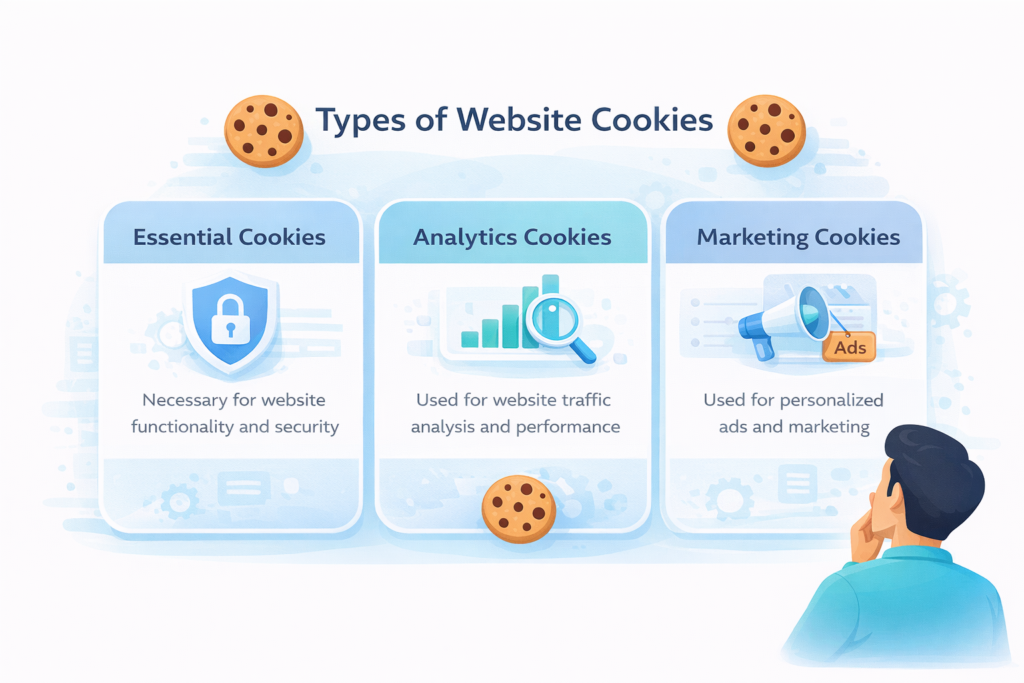
Most websites use several different types of cookies. Each category serves a different purpose, ranging from basic website functionality to analytics and advertising.
Understanding the different types of cookies helps website owners manage privacy compliance and configure cookie banners correctly.
Essential Cookies
Essential cookies (also called strictly necessary cookies) are required for a website to function properly.
These cookies enable core features such as:
-
login authentication
-
security protection
-
shopping cart functionality
-
website navigation
Without essential cookies, many websites would not work correctly.
Because these cookies are necessary for basic functionality, they usually do not require user consent.
Analytics Cookies
Analytics cookies collect information about how visitors interact with a website.
These cookies help website owners understand things like:
-
how many visitors the site receives
-
which pages are most popular
-
how users navigate through the site
-
how long visitors stay on pages
Common analytics tools that use cookies include:
-
Google Analytics
-
Matomo
-
Adobe Analytics
Under GDPR rules, analytics cookies typically require user consent before they are activated because they collect behavioral data about visitors.
Marketing Cookies
Marketing cookies (also called advertising cookies) are used to track users across websites in order to deliver personalized advertisements.
These cookies may:
-
track browsing behavior
-
build advertising profiles
-
measure ad campaign performance
-
retarget visitors with ads
Examples include cookies from:
-
Google Ads
-
Facebook Pixel
-
LinkedIn Ads
-
advertising networks
Because marketing cookies track user behavior across multiple websites, they always require explicit user consent.
Preference Cookies
Preference cookies store information about user settings and choices.
These cookies may remember:
-
language settings
-
region preferences
-
UI customization
-
accessibility settings
Preference cookies improve the user experience by personalizing how a website appears for each visitor.
Some preference cookies may require consent depending on how they are used.
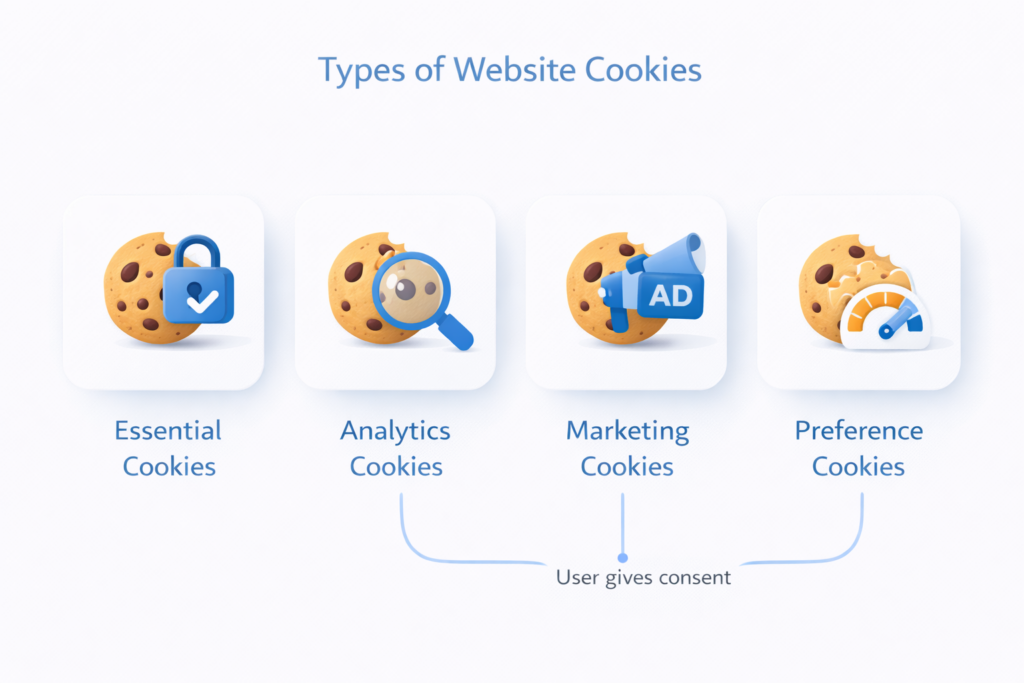
3. Which Types of Cookies Require Consent?
Not all cookies require user consent. Privacy laws such as GDPR distinguish between essential cookies and non-essential cookies.
The table below shows the most common types of website cookies and whether they typically require user consent under GDPR and other privacy laws.
| Cookie Type | Purpose | Consent Required |
|---|---|---|
| Essential cookies | Website functionality | No |
| Analytics cookies | Website statistics | Usually yes |
| Marketing cookies | Advertising and tracking | Yes |
| Preference cookies | User settings | Sometimes |
This overview helps website owners understand which cookies require consent under GDPR. Understanding these categories helps website owners configure cookie banners correctly.
4. First-Party vs Third-Party Cookies
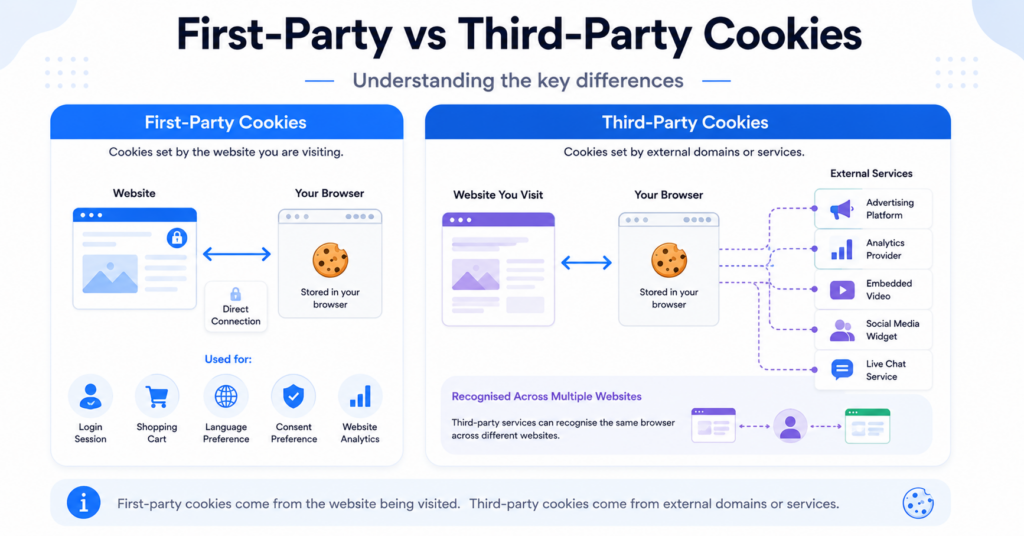
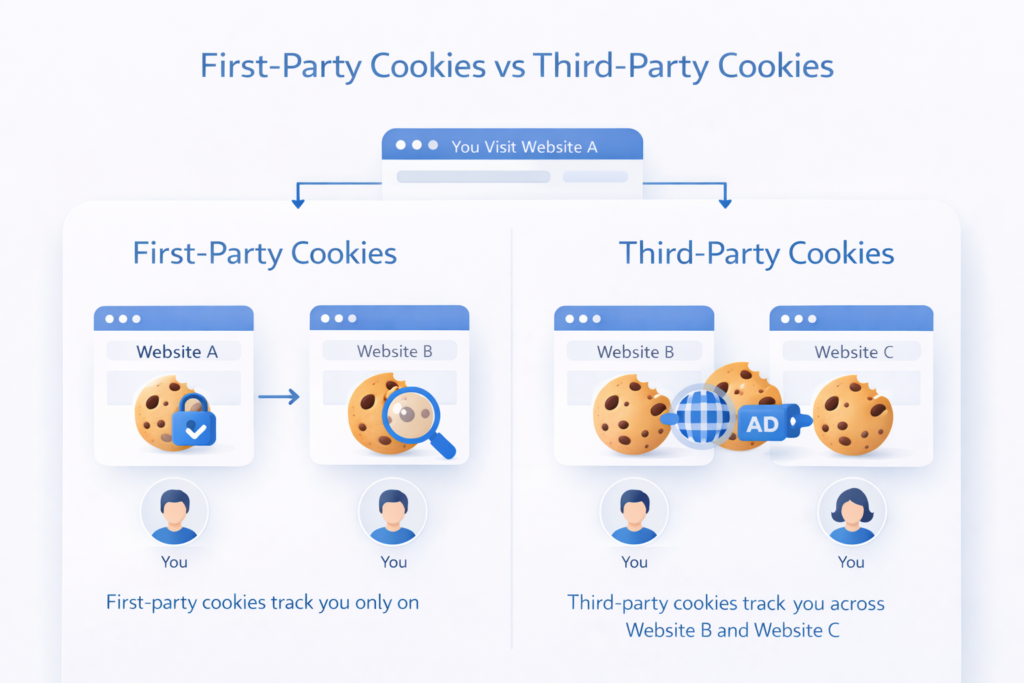
Cookies can also be classified based on who sets them.
First-party cookies:
• Set by the website you visit
• Usually used for functionality or analytics
Third-party cookies:
• Set by external services
• Often used for advertising and tracking
First-party cookies
These cookies are set directly by the website that the user visits. They are commonly used for functionality, analytics, or user preferences.
Third-party cookies
Third-party cookies are set by external services such as advertising networks, analytics providers, or social media platforms.
These cookies are often used for:
-
advertising targeting
-
cross-site tracking
-
social media integrations
Third-party cookies are more heavily regulated because they can track users across multiple websites.
5. How Cookie Banners Manage Cookie Categories
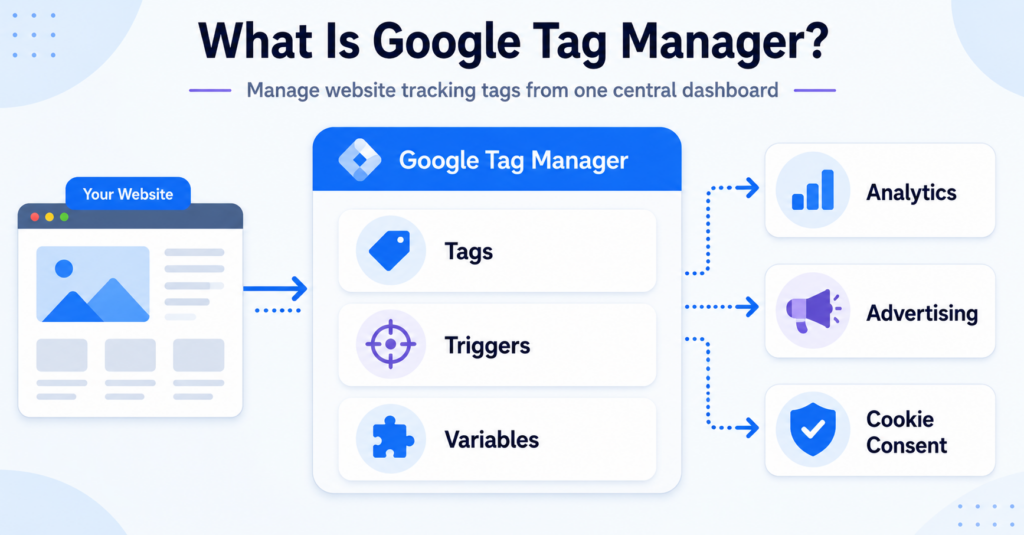
Modern cookie banners allow websites to organize cookies into categories such as:
-
essential cookies
-
analytics cookies
-
marketing cookies
-
preference cookies
This allows users to choose which types of cookies they allow.
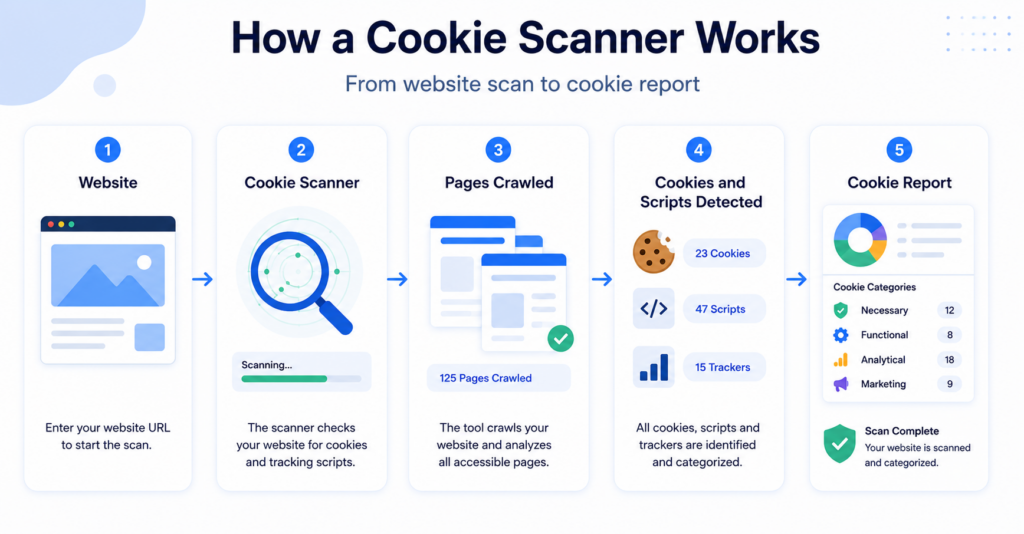
Most cookie consent platforms automatically detect and categorize cookies on your website. This helps website owners manage cookie preferences without manually configuring each tracking script.
Most website owners use cookie consent platforms to automatically manage cookie categories and consent settings.
Conclusion
Understanding the different types of website cookies helps website owners manage privacy compliance and improve transparency with users. While some cookies are necessary for basic functionality, others track user behavior and require explicit consent.
By categorizing cookies correctly and using a compliant cookie banner, websites can respect user privacy while still benefiting from analytics and marketing tools.
📘 Next Steps: Learn More About Cookie Compliance
Now that you understand the different types of website cookies, the next step is learning how cookie consent works in practice.

Frequently Asked Questions
Common questions about this topic
The main types of cookies include essential cookies, analytics cookies, marketing cookies, and preference cookies. Each category serves a different purpose on a website.
No. Essential cookies required for basic website functionality usually do not require consent. However, analytics and marketing cookies typically require user permission.
In many cases, analytics cookies may collect personal data or behavioral data, which is why privacy regulations like GDPR require user consent before activating them.
Cookie banners display cookie categories so users can choose which types of cookies they allow, giving them greater control over their privacy.
The four main types of website cookies are essential cookies, analytics cookies, marketing cookies, and preference cookies. Each category serves a different purpose and some require user consent under privacy regulations like GDPR.