Do small websites need a cookie banner? In many cases, yes—if the site uses analytics, advertising, or third-party tools that set non-essential cookies.
This guide explains when a small website needs a cookie banner, when it may not, and what matters most before you decide.
You’ll also learn when to move on to Does My Website Need a Cookie Banner? and when it helps to check your setup with the Cookie Scanner.
Yes, small websites may still need a cookie banner if they use analytics, tracking, embedded content, or third-party tools that set non-essential cookies.
If your site only uses strictly necessary cookies, you may not need the same kind of consent setup. The key issue is usually what your website does, not how big it is.
Why Small Websites Still Need to Think About Cookie Banners
Many small website owners assume cookie rules only matter for large companies, ecommerce stores, or heavily tracked websites. That is one of the most common misunderstandings.
In reality, the main question is not how big your website is. It is whether your site uses non-essential cookies or similar tracking tools that need user consent before they are set.
In simple terms, a small website can still need a cookie banner if it uses the same tools as a larger one.
Why Website Size Is Not the Main Issue
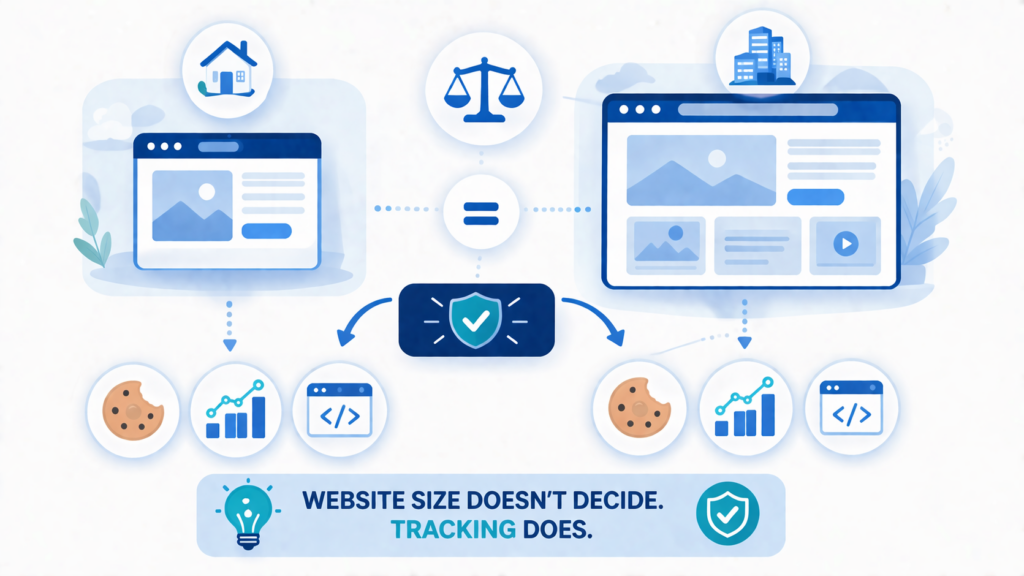
Website size may change your risk level, but it does not automatically change the cookie rules that apply to your setup.
If a small site uses analytics, ad tracking, embedded videos, or third-party scripts, it may still need a cookie banner and consent controls. Many cookie rules focus on the use of non-essential cookies, not on whether the business behind the site is large or small.
That means even a simple local business site, personal brand site, or small blog can run into compliance issues if it uses tracking tools without a proper consent flow.
A small website is not automatically exempt from cookie rules. If it uses non-essential cookies, the setup may still require user consent before those cookies are set.
When a Small Website Usually Does Need a Cookie Banner
Small websites often need a cookie banner when they use tools that go beyond strictly necessary site functions.
That usually includes cases like these:
- you use Google Analytics or similar analytics tools
- you use Meta Pixel, Google Ads, or remarketing tools
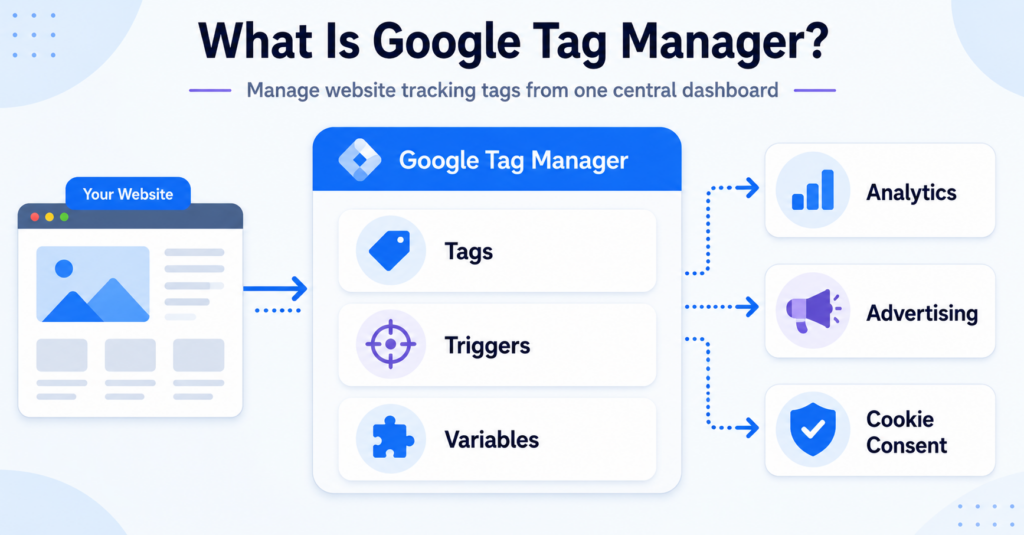
- you embed YouTube videos, maps, forms, or chat widgets
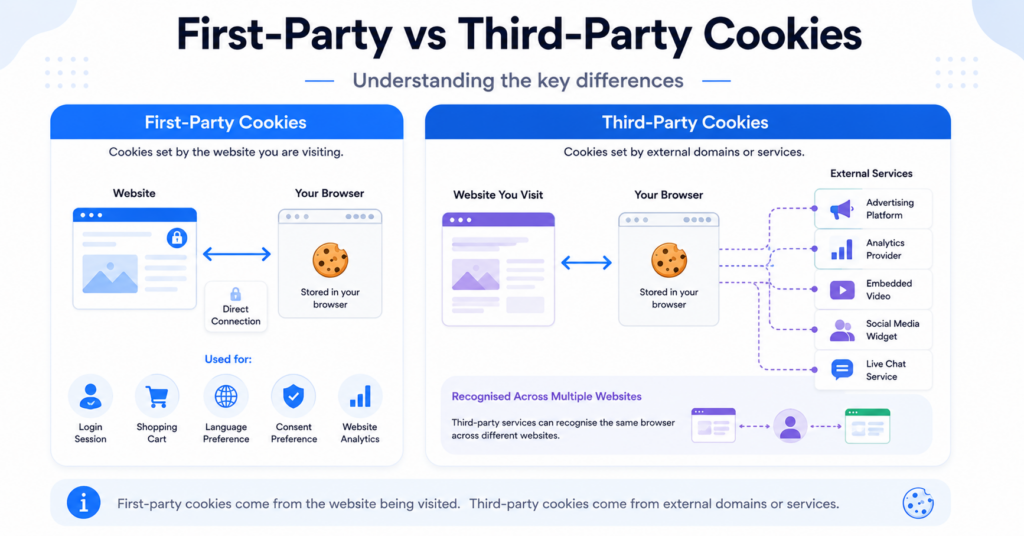
- you use third-party scripts that track visitors
- you personalize content using non-essential cookies
If any of these apply, your website may need a consent banner and better control over when those tools are allowed to load.
When a Small Website Might Not Need a Cookie Banner
Some small websites may have lower risk and may not need the same kind of consent banner if they only use strictly necessary cookies.
That may be the case if your site:
- does not use analytics or advertising cookies
- does not include embedded third-party content
- only uses cookies needed for core website functions
- is a very simple static website with no tracking tools
However, many small websites assume they fall into this group when they do not. That is why it helps to check your real setup instead of guessing.
If your website uses analytics, embedded videos, or third-party tools, it is safer to assume you should check whether a cookie banner is needed.
Common Tools That Often Trigger Cookie Banner Requirements
Small websites often feel simple on the surface, but their tools can make the privacy setup more complex.
Common examples include:
- Google Analytics
- Meta Pixel
- YouTube embeds
- Google Maps embeds
- live chat tools
- marketing forms and tracking integrations
These are exactly the kinds of tools that can make a small website need a cookie banner.
Does Visitor Location Matter?
Yes, location can matter. If your website gets visitors from the EU or UK, cookie consent rules are usually stricter, especially for analytics and marketing cookies. According to GDPR guidance, non-essential cookies usually require user consent before they are set.
Other regions may use different privacy rules, but transparency and user choice can still matter outside Europe too. In practice, many website owners use GDPR-style consent as the safest baseline when they are unsure.
That is often the simplest approach for small websites that serve visitors from more than one country.
What Small Website Owners Often Get Wrong
The most common mistake is assuming that “small” means “exempt.” That is not always true.
Other common mistakes include:
- thinking analytics cookies do not count
- assuming a privacy policy is enough on its own
- using third-party embeds without checking what they load
- believing cookie rules only apply to large companies
If you want to understand the real risks and what can go wrong, read What Happens If You Don’t Have a Cookie Banner?.
How to Decide If Your Small Website Needs a Cookie Banner
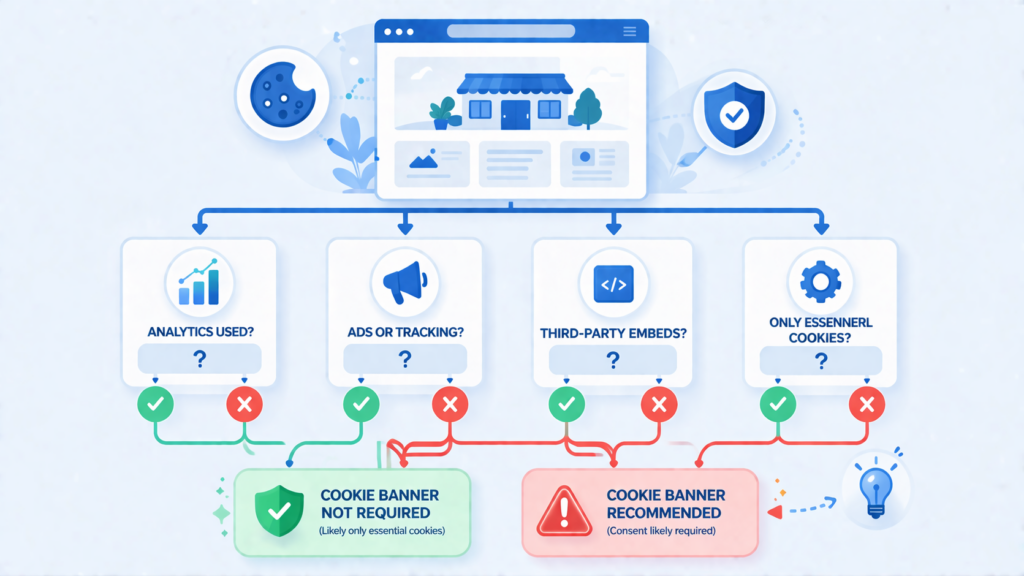
The easiest way to think about it is this: forget website size for a moment and look at the tools your site uses.
Ask yourself:
- Does my site use analytics?
- Does my site use advertising or remarketing tools?
- Does my site embed content from third parties?
- Does my site place non-essential cookies before the user chooses?
If the answer is yes to any of these, there is a good chance your website needs a cookie banner or some form of consent setup.
If you’re unsure what type of setup you actually need, read What Type of Cookie Consent Solution Does Your Website Need? to choose the right approach for your website.
If your small website uses analytics, ads, or third-party tracking tools, you should probably have a cookie banner.
If your site only uses strictly necessary cookies and no tracking, your risk is lower — but it is still worth checking your setup.
What Should You Do Next?
The next step is not choosing a tool right away. First, make sure you understand whether your website actually needs a cookie banner.
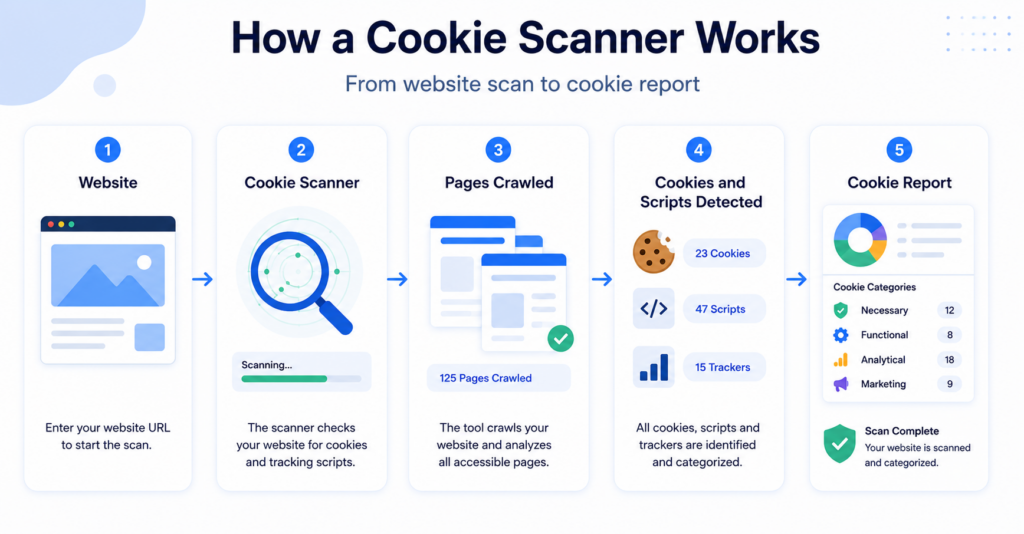
You can also check your current setup with the Cookie Scanner to see whether your website may be using cookies or scripts that need consent.
Not sure whether your website really needs a cookie banner?
Conclusion
Yes, small websites can still need a cookie banner. In many cases, the deciding factor is not the size of the site, but whether it uses analytics, advertising, embedded content, or other non-essential tracking tools.
If your website is very simple and only uses strictly necessary cookies, your risk may be lower. But if you are unsure, it is much safer to check your setup than to assume the rules do not apply to you.
Next Step: Check If Your Website Needs a Cookie Banner
Not every small website needs the same setup. The easiest way to move forward is to check your website and understand what applies to you.
Start by answering one simple question: does your website actually need a cookie banner?

Frequently Asked Questions
Common questions about this topic
In many cases, yes. If the site uses analytics, advertising, or third-party tools that set non-essential cookies, a cookie banner may be needed.
Your risk may be lower. Websites that only use strictly necessary cookies may not need the same kind of consent setup as tracked websites.
Often, yes. Analytics cookies are not always considered strictly necessary, so they may require consent before being set.
Sometimes they do. A small blog using analytics, embeds, or ad tools can still need a cookie banner even if traffic is low.
Start by checking what cookies, scripts, and third-party tools your site uses. That will tell you much more than your website size alone.