What is a cookie policy? A cookie policy is a page that explains what cookies your website uses, why they are used, and what choices visitors have.
This guide breaks it down in simple terms, explains how a cookie policy is different from a cookie banner and a privacy policy, and shows when websites usually need one.
You’ll also learn what to do next if your website needs a cookie policy.
A cookie policy is a page that explains what cookies your website uses, what they do, and how visitors can manage them.
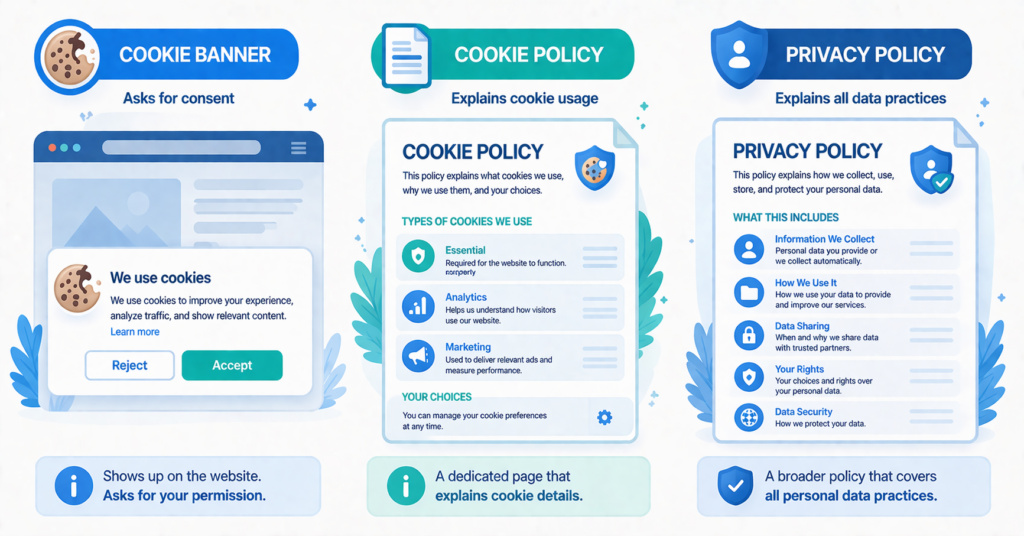
It is different from a cookie banner. The banner asks for a choice, while the cookie policy explains that choice in more detail.
What Is a Cookie Policy?
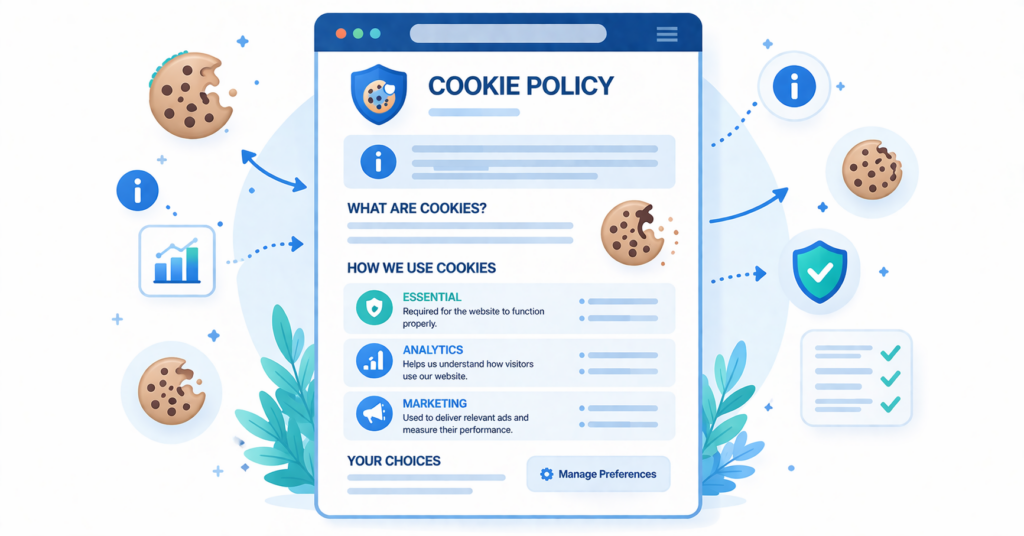
A cookie policy is a page on your website that explains how cookies and similar tracking technologies are used.
It helps visitors understand what cookies are active, why they are used, whether third parties are involved, and what options users have for accepting, rejecting, or managing them.
In simple terms, a cookie policy is the place where you explain your website’s cookie use clearly and in one place.

What Does a Cookie Policy Usually Include?
A cookie policy usually explains the most important details about your website’s cookie setup.
- what cookies your website uses
- why those cookies are used
- whether the cookies are essential or non-essential
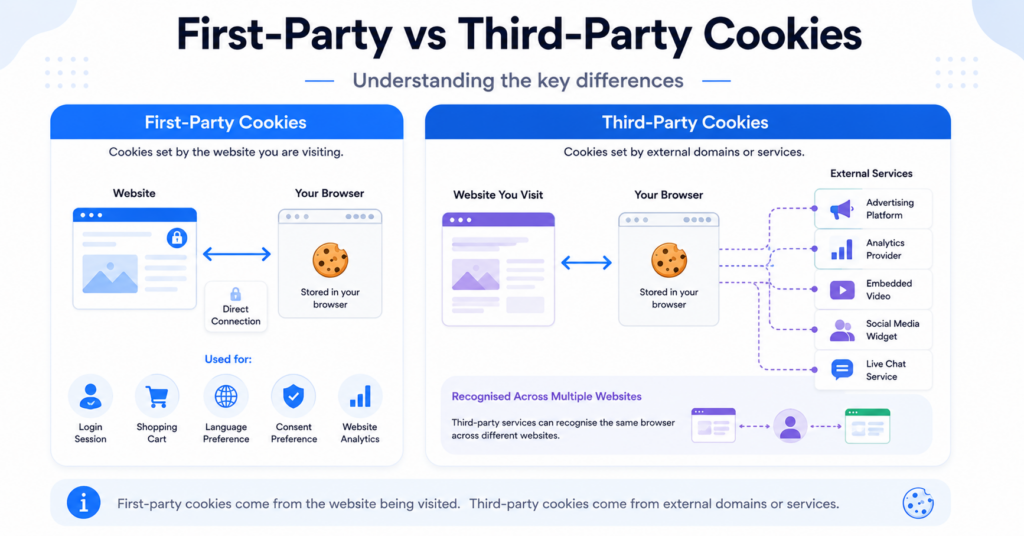
- whether third-party services are involved
- how users can control or reject cookies
Some websites include this information inside a broader privacy policy, while others use a separate cookie policy page.
A cookie policy is not just a legal formality. It is part of how your website explains tracking and gives users clear information about what is happening behind the scenes.
Cookie Policy vs Cookie Banner
These two are often confused, but they do different jobs.
- Cookie banner: asks the visitor to accept, reject, or manage cookies
- Cookie policy: explains what cookies are used and why
If you want to learn more about banners, read What Is a Cookie Banner?.
Most websites that need a cookie banner will also need a cookie policy, because users should be able to read what they are agreeing to.
Cookie Policy vs Privacy Policy
A cookie policy and a privacy policy are also not the same thing.
A privacy policy explains broader topics such as what personal data is collected, how it is processed, who it is shared with, and what rights users have.
A cookie policy focuses specifically on cookies, tracking technologies, and similar tools used on the website.
Some websites combine these into one document, but many use separate pages to make things easier to understand.
Why Cookie Policies Matter
A cookie policy matters because privacy rules are not only about collecting consent. They are also about transparency.
If your website uses analytics, advertising, embedded content, or third-party tracking tools, users should be able to understand what is being used and why.
This is one reason cookie policies often go together with cookie banners. One gives the user a choice, and the other explains that choice.
If your website uses analytics, ads, or third-party tools, it is a good idea to review both your cookie banner and your cookie policy together.
Do All Websites Need a Cookie Policy?
Not always. Some very simple websites may only use strictly necessary cookies and may not need the same type of cookie documentation as websites using analytics or advertising tools.
However, many websites do use non-essential cookies without the owner fully realizing it. That is why it is often better to check your actual setup instead of assuming.
If you want to know whether your site needs one, read Do You Need a Cookie Policy on Your Website?
What Happens If You Don’t Have a Cookie Policy?
If your website uses cookies but does not explain them clearly, users may not understand what is happening or what they are agreeing to.
That can create transparency issues, trust problems, and a weaker privacy setup overall.
If you want to understand the risks in more detail, read What Happens If You Don’t Have a Cookie Policy?.
How to Tell If Your Website Has One
The easiest way to check is to look in your website footer, privacy section, or legal pages.
If your website already uses a cookie banner, consent tool, or privacy plugin, there may already be a cookie policy page or a section inside your privacy policy.
If not, you may need to create one or update your current documentation.
If your website uses analytics, ads, embedded content, or third-party tools, it probably needs a cookie policy.
If your site only uses strictly necessary cookies, your risk may be lower — but it is still worth checking your setup.
What Should You Do Next?
Once you understand what a cookie policy is, the next step is deciding whether your website needs one and, if it does, creating it properly.
Conclusion
A cookie policy is a page that explains how your website uses cookies and tracking technologies. It helps users understand what is happening and supports a clearer, more transparent privacy setup.
For many websites, a cookie policy works together with a cookie banner. One gives users a choice, and the other explains that choice in more detail.
Next Step: Create or Review Your Cookie Policy
If your website uses cookies beyond strictly necessary functions, the next step is to check whether you already have a cookie policy and whether it matches your real setup.

Frequently Asked Questions
Common questions about this topic
A cookie policy explains what cookies your website uses, why they are used, and how users can manage them.
No. A cookie banner asks for a choice, while a cookie policy explains the cookies and tracking tools in more detail.
Not always. It depends on whether the website uses non-essential cookies, analytics, ads, or third-party tracking tools.
Yes, sometimes. Some websites include cookie details inside their privacy policy, while others use a separate cookie policy page.
The next step is to check whether your website needs a cookie policy and, if it does, make sure it reflects your real cookie setup.